Menu
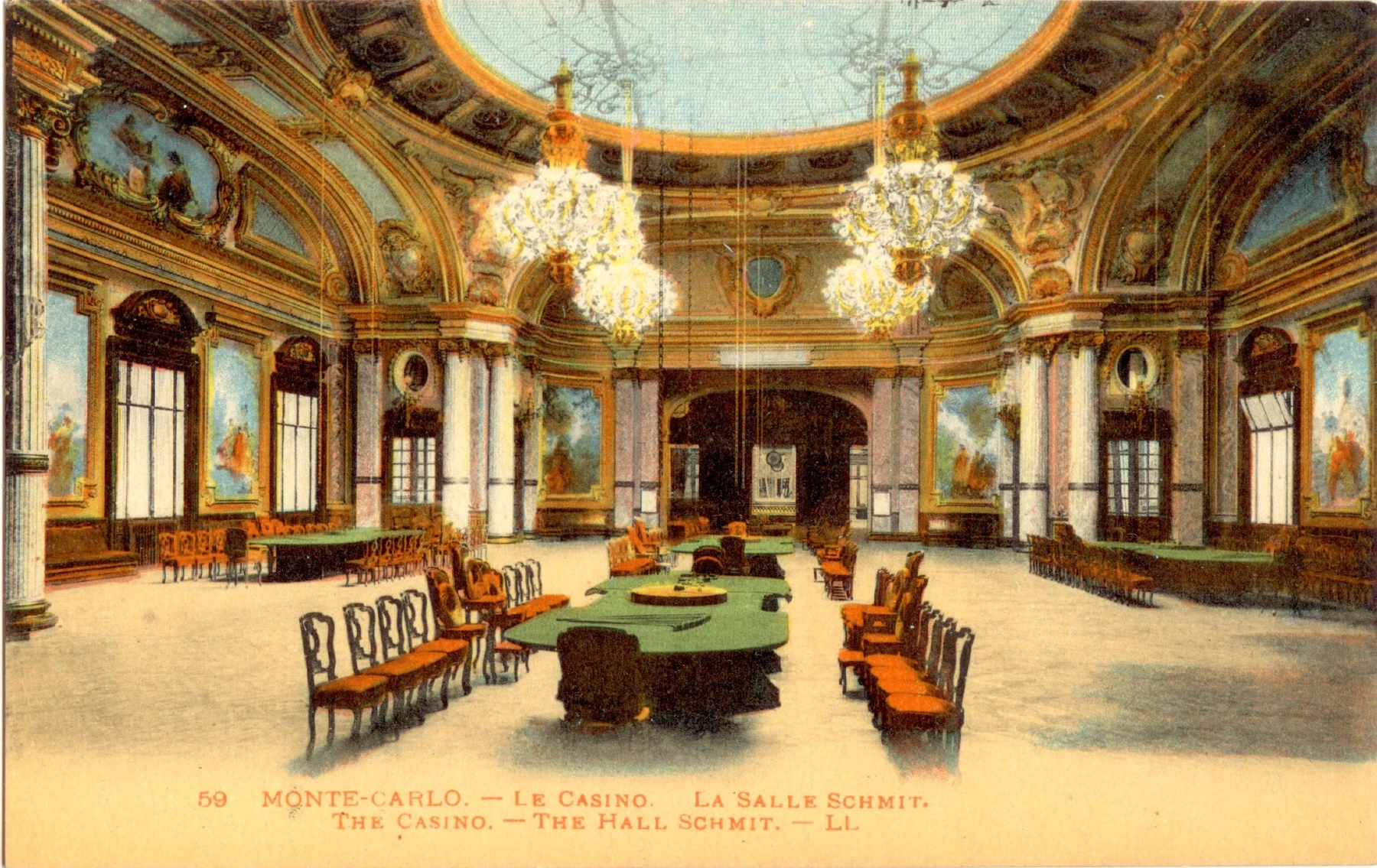
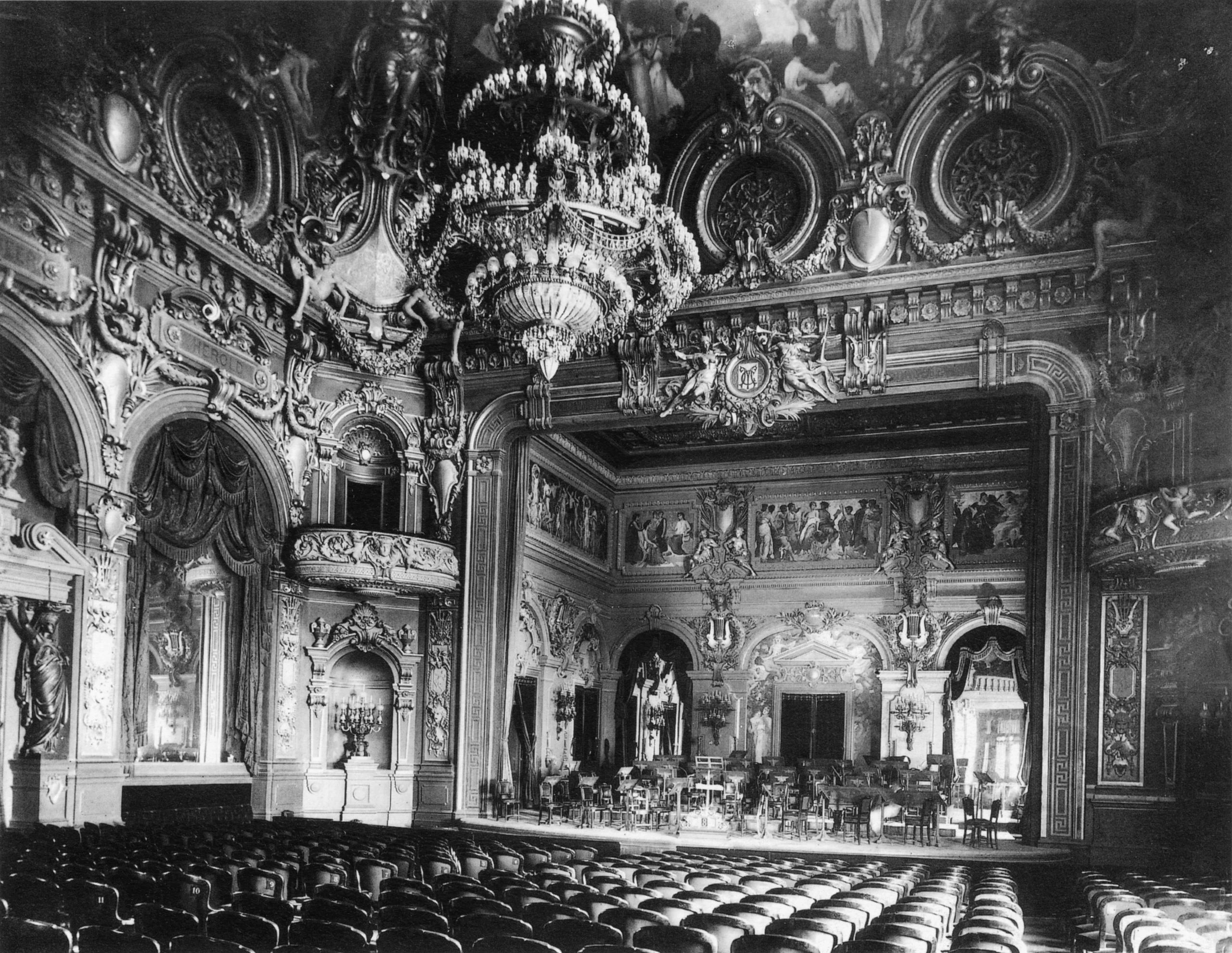
The richly decorated Monte Carlo Casino gaming hall on a postcard from around 1900

The making of the little wheel

History
of Roulette

Roulette took shape in France and travelled through the spa towns and casino resorts of the nineteenth century. Its story has no single proven inventor.

Follow the history
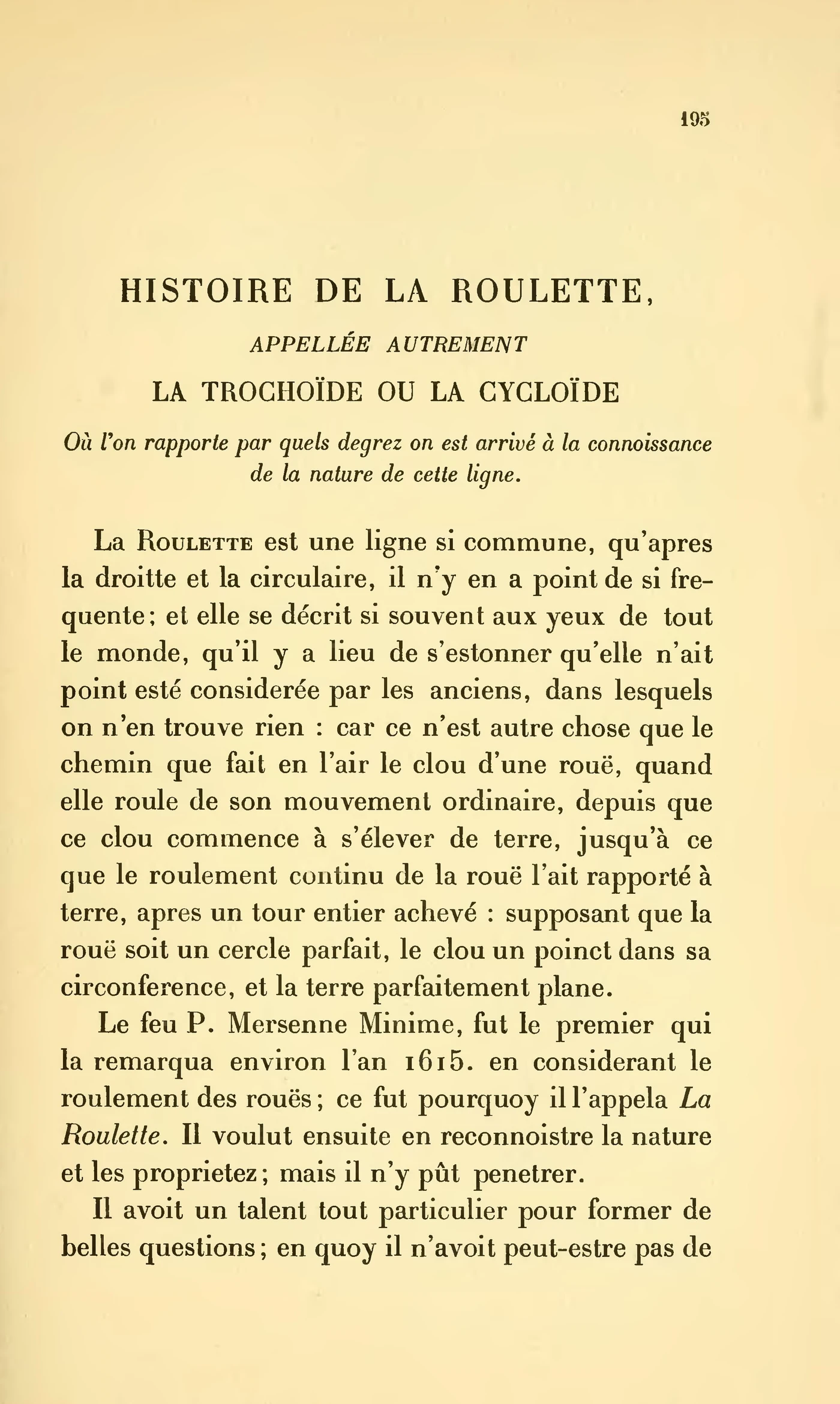
The printed heading of Pascal’s Histoire de la roulette, identifying the trochoid or cycloid
Pascal · 1658
The cycloid

Monte Carlo Casino gaming hall · postcard, c.1900

01 / An uncertain beginning

Who invented
roulette?

Roulette means “little wheel” in French. The casino game took shape in eighteenth-century France, within a much older culture of games of chance. Neither a single inventor nor an exact invention date is known.

Paris · 1658

Pascal’s subject
was a curve.

In Histoire de la roulette, Pascal used roulette for the cycloid: the path of a point on a rolling circle. This work does not establish him as the inventor of the casino game.

Roll the circle
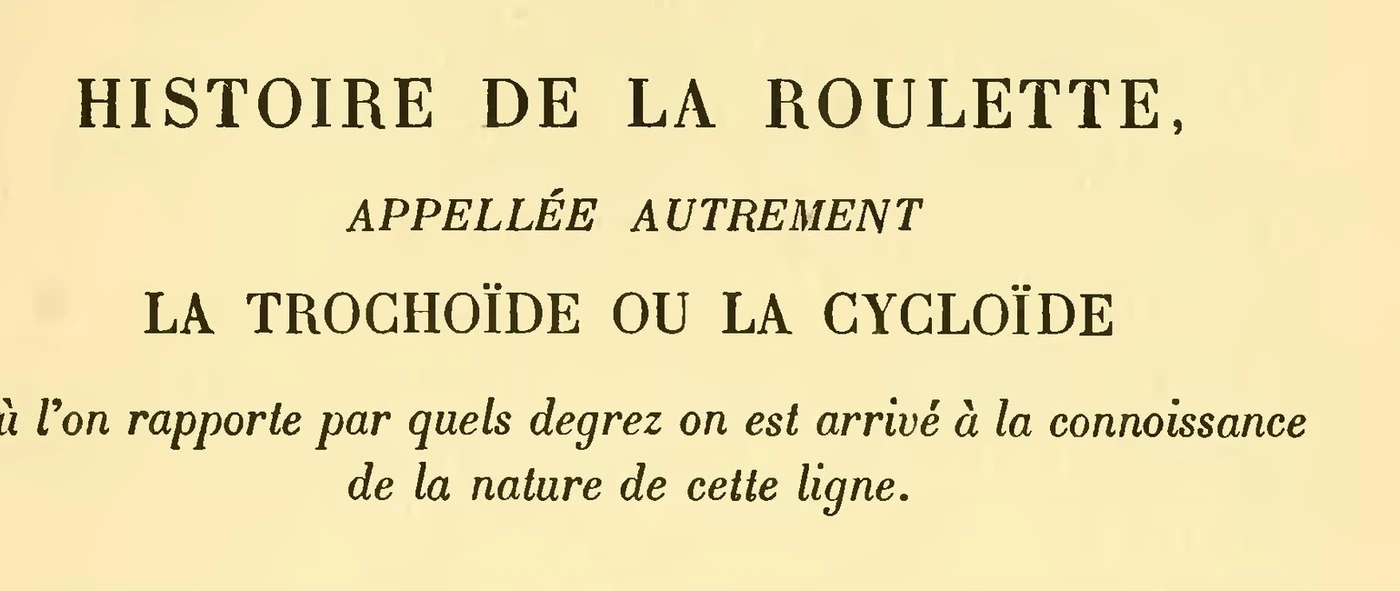
Pascal’s printed title: Histoire de la roulette, also called the trochoid or cycloid

La trochoïde ou la cycloïdeThe trochoid or cycloid

Pascal’s study of the cycloid, written in 1658.
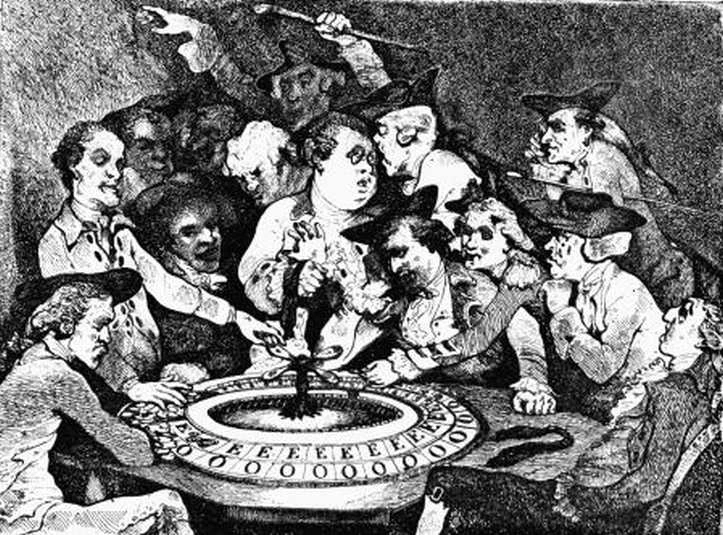
Gamblers crowd around a table marked E and O in Rowlandson’s E O, or the Fashionable Vowels
An E.O. gaming table in eighteenth-century Britain.

Letters around
a gaming table.

E.O. — Even and Odd — was played in eighteenth-century Britain. Gamblers gather around a circular table marked with letters, rather than the numbered grid familiar today.

Games such as E.O., hoca and biribi belonged to roulette’s wider gaming culture. Similarities do not establish a single, uninterrupted line of invention.

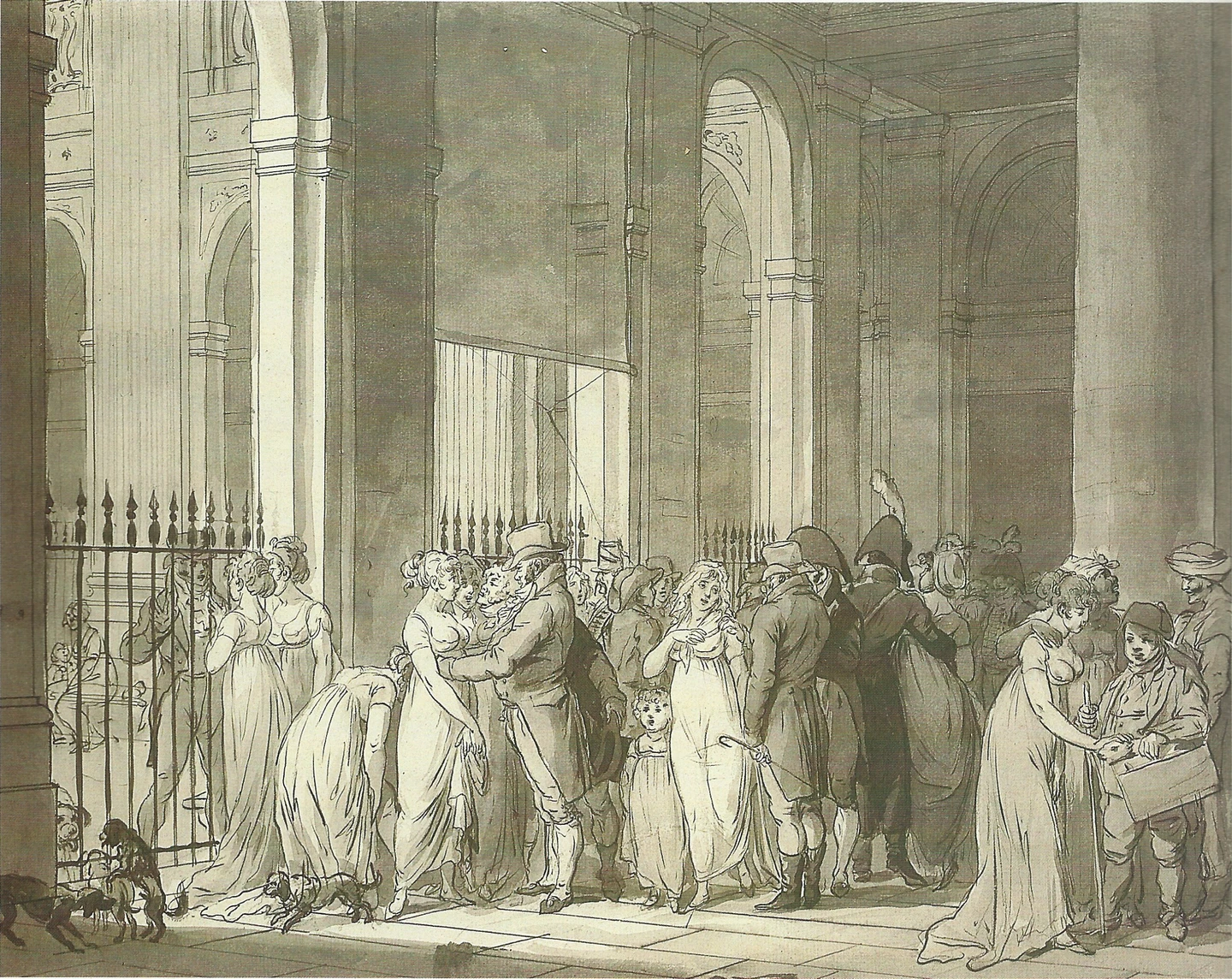
Visitors beneath the Palais-Royal arcades around 1803
Parisian social life beneath the Palais-Royal arcades, c.1803.

France · late eighteenth century

A game in
Parisian life.

Roulette developed in France in the eighteenth century. Jacques Lablée’s novel describes a game already being played in Paris; it is a literary account, not a record of the first spin.

1796Commonly cited narrative setting

1802An early edition of Lablée’s novel

Paris and Lablée’s account

Stories crediting monks, missionaries or Pascal’s supposed search for perpetual motion remain unproven origin legends.

02 / Paris, 1658

The roulette
on Pascal’s page.

Pascal investigated the cycloid’s mathematical properties and challenged other geometers to solve problems about it. His “roulette” was a curve traced by a rolling circle, more than a century before the Paris game described by Lablée.

Printed heading of Pascal’s Histoire de la roulette, identifying its subject as the trochoid or cycloidHistoire de la roulette, also called the trochoid or cycloid: detail of Pascal’s printed title
Pascal’s study of the cycloid, written in 1658.

The word on the page

Roulette.
A rolling circle’s curve.

In Pascal’s title, roulette is also called the trochoid or cycloid. A point on the circle’s rim traces an arch as the circle rolls without slipping. After one complete turn, the point touches the ground again.

A circle rolling without slipping traces a cycloidThe centre moves r times theta horizontally. The marked point follows x equals r times theta minus sine theta, y equals r times one minus cosine theta.One turn · horizontal travel = 2πr
The rim point traces the red lineThe circle rolls without slipping

03 / Paris, late eighteenth century

The game enters
the city’s public life.

The Palais-Royal’s arcades brought together shops, promenaders and places of entertainment. Gambling was part of this public life, and roulette became one of the city’s games.

Visitors gathered beneath the arcades of the Palais-Royal around 1803
Visitors beneath the Palais-Royal arcades, c.1803.
Jacques Lablée

La Roulette,
ou Histoire
d’un joueur

1802 surviving edition
1796

The commonly cited year in which Lablée’s account of Paris roulette is set.

1802

The date of a surviving edition. The narrative looks back to the previous century.

Jacques Lablée’s novel, La Roulette, ou Histoire d’un joueur, appeared around 1801–1802 and describes a game already being played. Its publication does not mark roulette’s invention.

Pocket colours and number arrangements varied as roulette developed. The green zeros and familiar sequences of today’s wheels should not be assumed for every early table.

04 / Homburg, early 1840s

A spa town.
One fewer house pocket.

François and Louis Blanc promoted roulette without the double zero in Homburg, now Bad Homburg. The casino opened in 1841. A surviving wheel is associated with single-zero play there in May of that year.

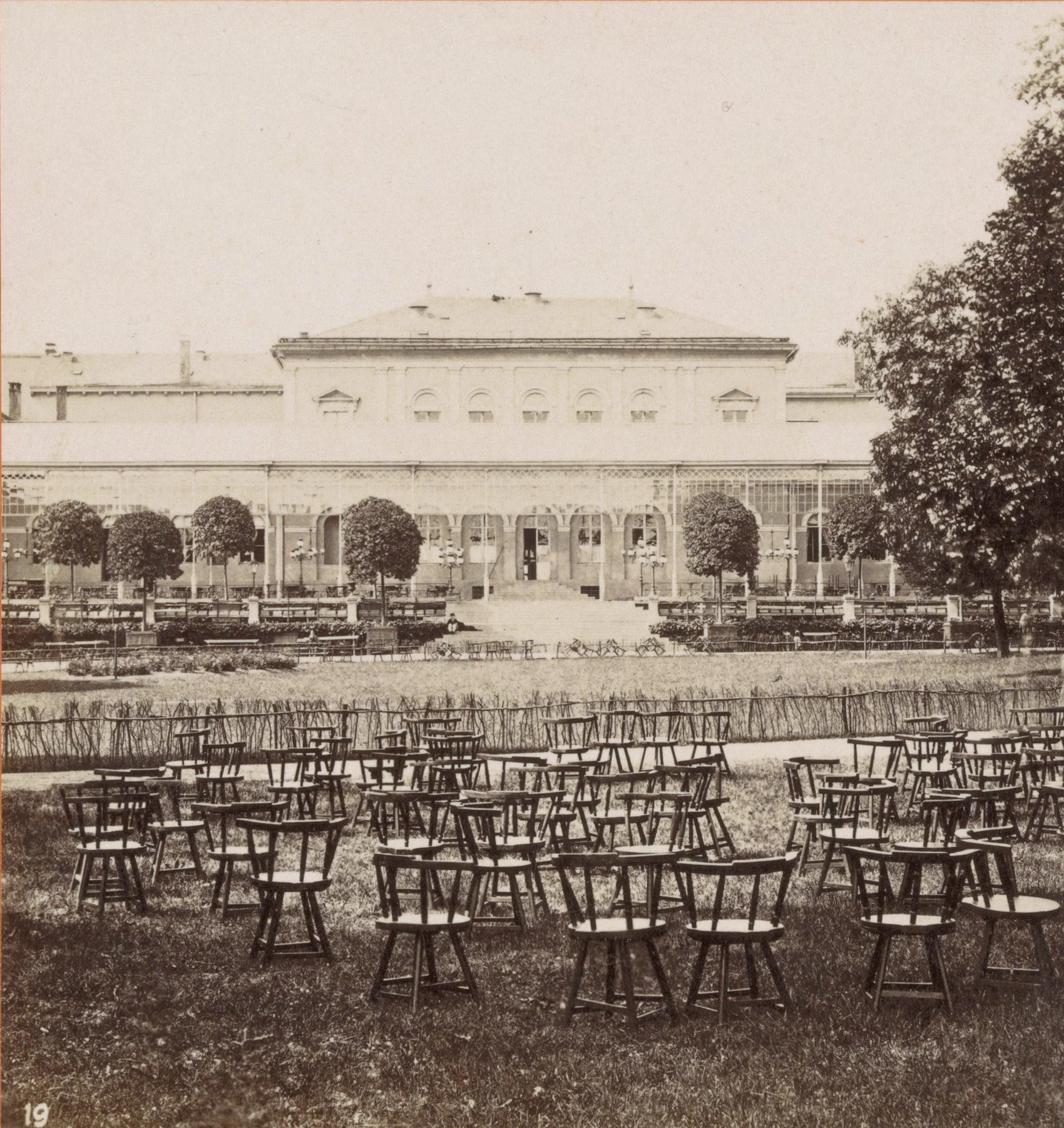
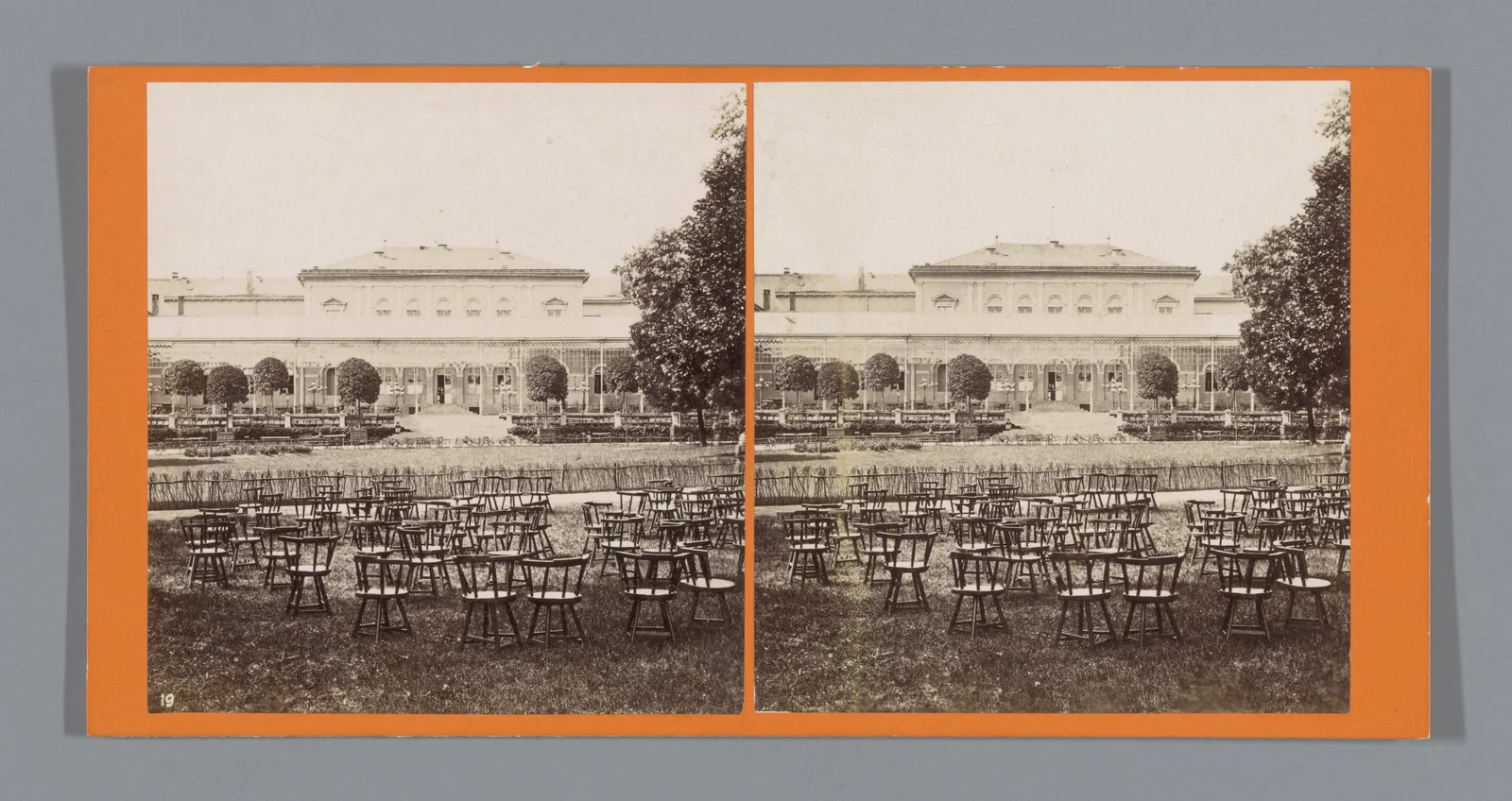
The Homburg Kurhaus and garden concert seating in a nineteenth-century photograph
The Homburg Kurhaus and its gardens, c.1855–1870.

The casino within the spa resort

Visitors came for
more than the tables.

The Kurhaus setting placed gambling alongside gardens, concerts and the social life of a spa town. The Blanc casino moved into the Kurhaus in 1843, two years after its opening in Homburg.

Removing 00 left 37 pockets instead of 38. A Red bet still won on 18 numbers and paid 1:1, but now lost on 19 outcomes instead of 20. That reduced the casino’s average advantage.

Double zero38possible outcomes2/38 ≈ 5.26%
Single zero37possible outcomes1/37 ≈ 2.70%

House edge is the casino’s average share of all money wagered over the long run. These figures use standard even-money payouts, without La Partage or En Prison.

How zero changes the odds


05 / Monaco becomes a destination

The casino.
The town.
The stage.

François Blanc brought his experience in Homburg to Monaco. In Monaco, the gaming enterprise developed alongside hotels, gardens and, later, an ambitious programme of music and theatre.

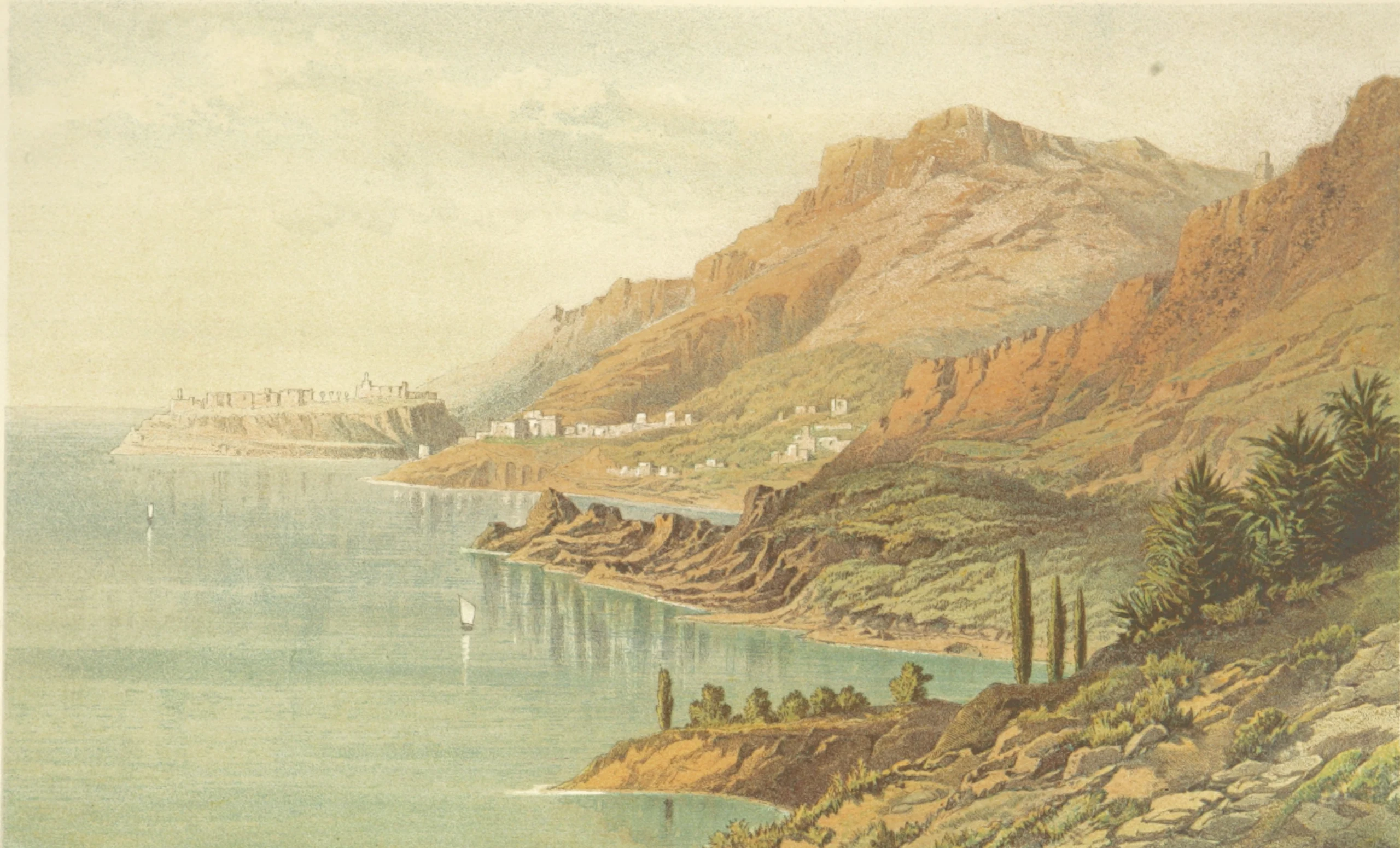
Colour lithograph of Monaco’s coast and the eastern slopes, published in 1870
Monaco’s eastern coast and developing district, 1870.

A casino becomes part of a resort.

Casino ventures in Monaco already had authorization in 1856. In 1863, Prince Charles III established Société des Bains de Mer. François Blanc brought experience from Homburg to the enterprise on the Spélugues plateau.

Hotels, gardens and places to gather broadened the attraction beyond the gaming room. François and Marie Blanc helped develop the Hôtel de Paris; the predecessor of the Café de Paris opened in 1868.

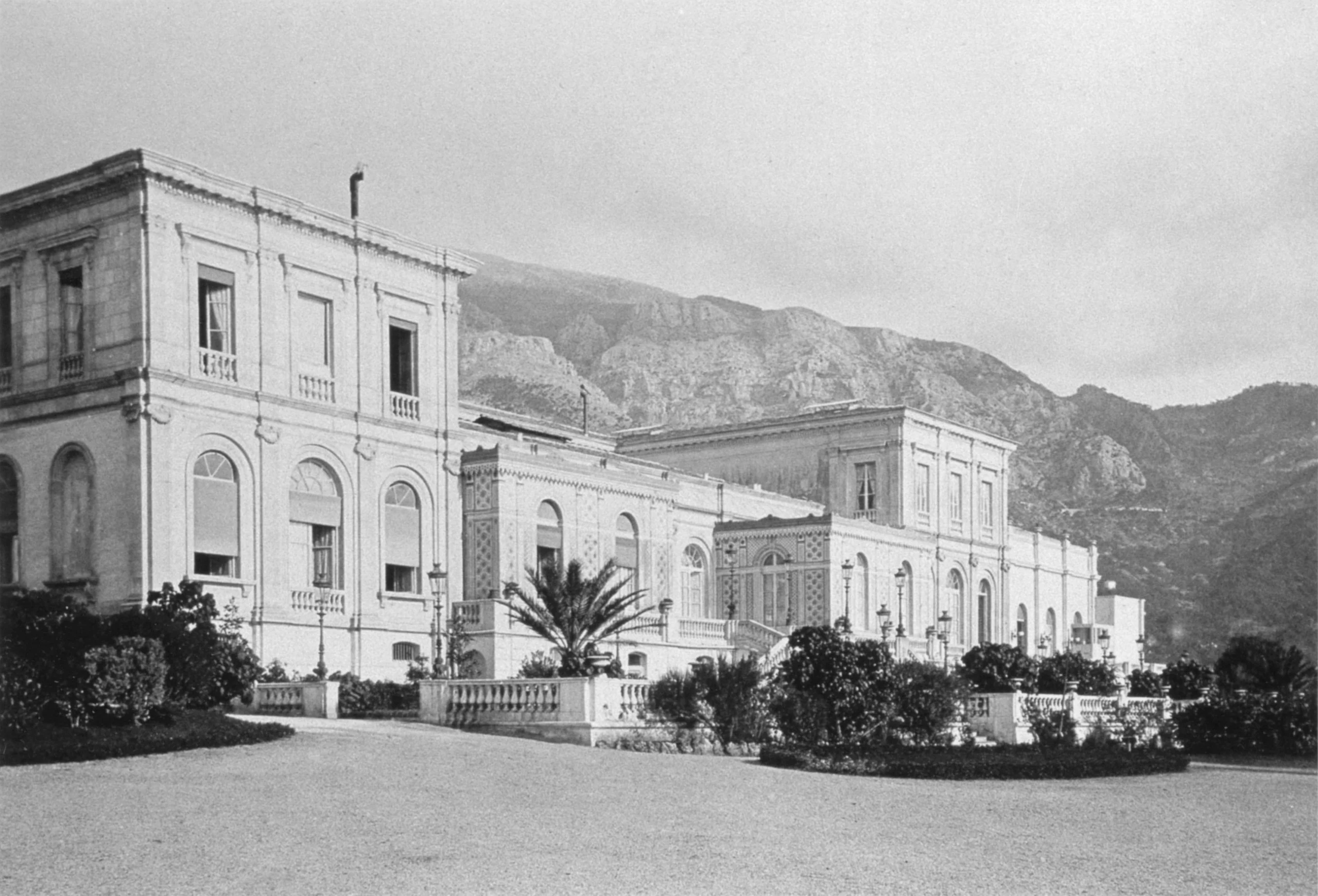
The early Monte Carlo Casino, its garden and seaward façade before the 1878 rebuilding
The casino’s seaward façade before the rebuilding of 1878.

A name for the new quarter.

On 1 June 1866, Charles III named the district Monte Carlo. The casino, hotels, villas and gardens were becoming a destination in their own right, distinct from the older town of Monaco.

The casino expanded as the resort grew. Rebuilding in 1878 transformed the earlier building, whose seaward façade appears in this photograph.

Salle Garnier’s decorated ceiling, balconies, auditorium and stage in a photograph from around 1879
Salle Garnier shortly after opening, c.1879.

Marie Blanc’s architectural ambition.

Marie Blanc commissioned Charles Garnier in 1878. His concert hall was inaugurated on 25 January 1879; the first opera followed on 8 February. Music and theatre became part of the casino resort’s social life.

Salle Garnier added a theatre to the gaming resort. Further extensions and alterations shaped the casino complex over the following decades.

06 / American roulette, nineteenth century

A game crosses
into American workshops.

Roulette spread through Europe and North America with variations in rules and equipment. By the late nineteenth century, American manufacturers were making distinctive betting layouts. One surviving cloth links the double-zero game to Providence, Rhode Island.

Providence, Rhode Island · c.1890

William Ellis’s
double-zero layout.

The surviving gilt-lettered betting layout was made by William Ellis in Providence, Rhode Island, around 1890. The cloth measures 31 × 53 inches.

Interpretive drawing of an American double-zero betting layoutTwo separate house spaces marked 0 and 00 sit beside a grid of the numbers 1 to 36. This is a schematic interpretation, not a facsimile or photograph of Ellis’s cloth. 000 3216549871211101514131817162120192423222726253029283332313635341–1213–2425–361–18EVENREDBLACKODD19–36
Interpretive drawing of a double-zero betting layout, informed by Ellis’s c.1890 cloth. Schematic placement and lettering; not a facsimile of the original.

By the late nineteenth century, American makers were supplying roulette’s betting surface as well as its wheel.

A betting cloth, not a wheel sequence

American equipment was not uniform. Early twentieth-century American roulette equipment used varying number ranges and sometimes an “Eagle Bird” mark alongside zeros. Ellis’s double-zero cloth is one surviving form; a betting layout does not specify the wheel’s pocket order.

A regional form, not a new invention of 00

Two-zero roulette also existed in Europe. The American label describes a format that became familiar in the United States, not proof that Americans invented the extra zero.

Present-day American roulette

07 / Tables, circuits and networks

Roulette becomes
an electronic game.

Electrical circuits could select a result, terminals could connect players to a shared table, and networks could deliver either software games or live video.

Roulette tables and chairs in the Monte Carlo gaming hall around 1900
Monte Carlo Casino gaming hall · postcard, c.1900.

A physical result, at the table

The wheel and dealer
share one room.

Players gathered around the betting layout. The dealer operated the wheel and settled wagers using the number where the ball landed.

Ball & wheelDealerWagers settled at the table
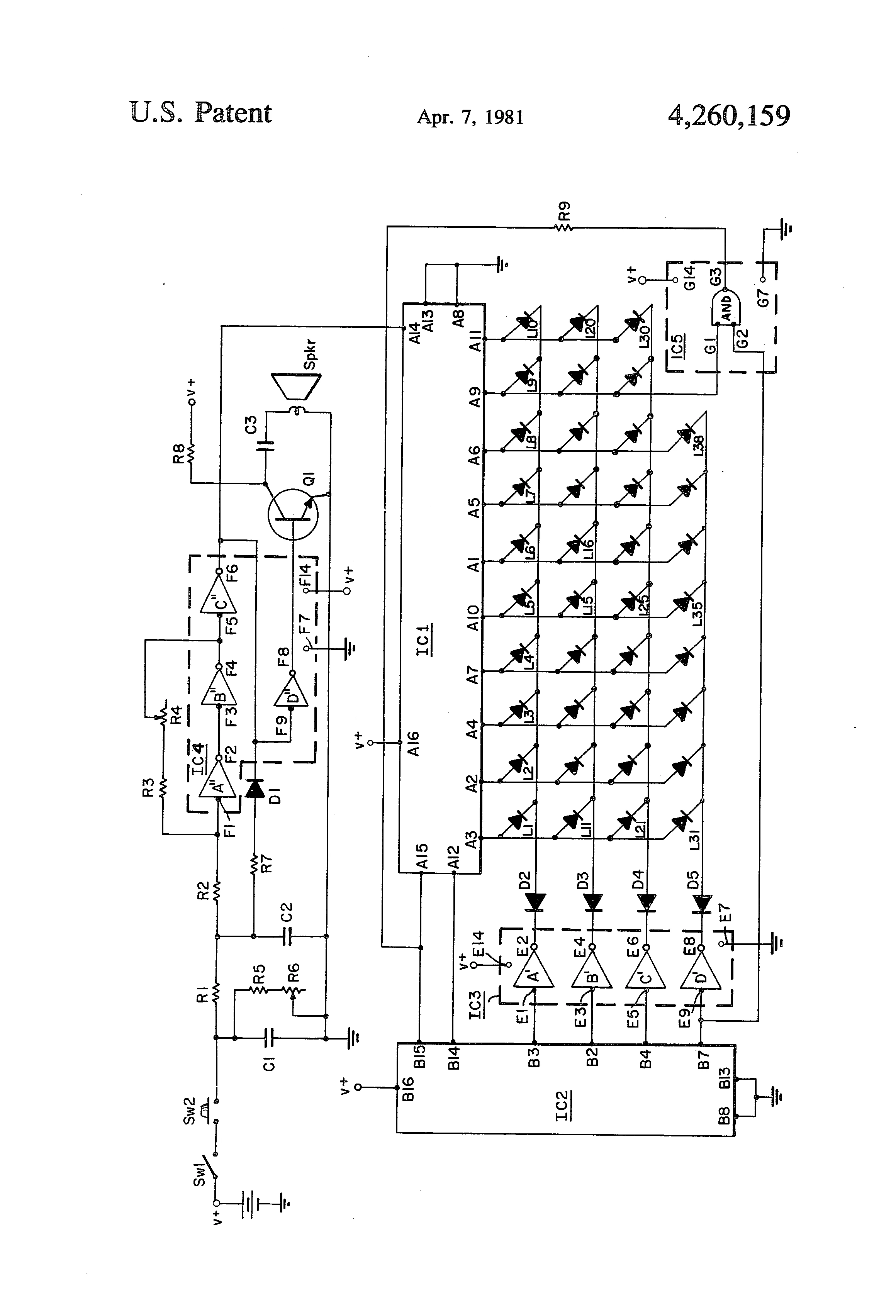
The circuit drawing in Jerzy Hoffman’s electronic roulette patent, showing a pulse generator and a matrix of 38 light-emitting diodes
Electronic roulette circuit · patent filed 22 August 1979, granted 7 April 1981.

1979 filing / 1981 patent

Electric lights
stand in for a ball.

Hoffman’s design uses 38 LEDs, a pulse generator and counters. Lights switch on in sequence; the circuit stops with one light illuminated. It is an electronic roulette design, not a record of the first commercial machine.

1997

NOVOMATIC developed TouchBet Live-Roulette in 1997. Player terminals connected many participants to one live roulette game. Electronic betting did not require replacing the physical ball with a software result.

Pulse generatorCounter circuitOne light remains on
Software roulette delivers an electronic result to a player’s screenAn outcome generator and game server are connected to a computer display. The number 17 travels as data; it is then represented by the interface. This is an interpretive diagram, not a historic operator screenshot.RNGOutcome generator17Roulette17Software-generated resultGame serverPlayer’s computer
Interpretive diagram of networked software roulette. No historic operator interface is reproduced.

The internet era

A result travels
as data.

Networked casino software separated the player’s screen from the system resolving the wager. In RNG roulette, a random number generator supplies the result; the animated wheel presents it.

A computer display alone does not identify the mechanism. A terminal can receive a physical wheel’s result, while an RNG game generates its outcome electronically.

Software-generated numberNetwork connectionScreen presentation
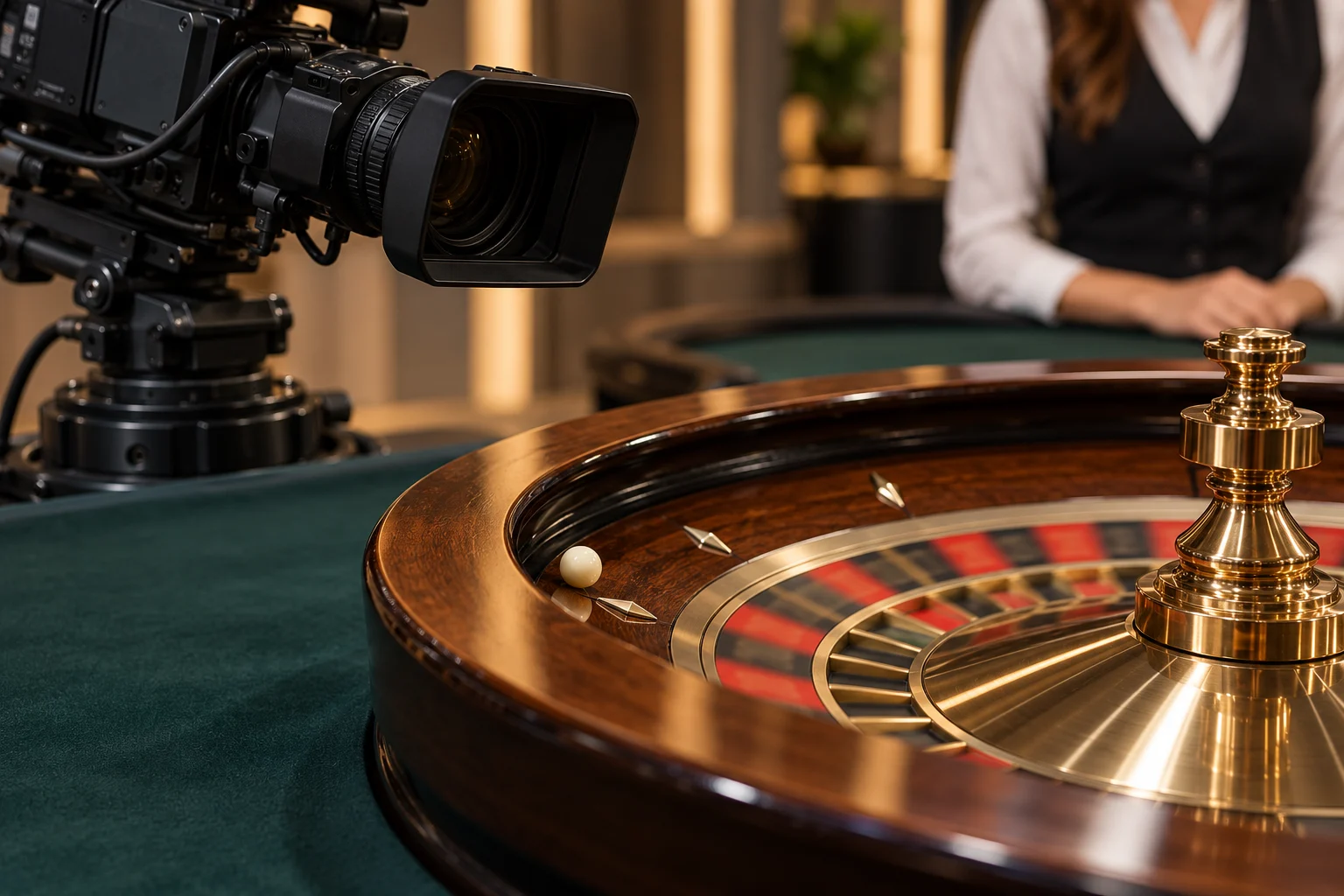
A broadcast camera beside a physical roulette wheel, with a dealer beyond the table
Contemporary illustration of a live-dealer studio; not footage from 2006.

2006 · Evolution company milestone

A real table reaches
remote players.

Evolution was founded in 2006 with a live-dealer offering that included roulette, blackjack and baccarat. This dates the company’s business, not the invention of live roulette.

A camera transmits the physical round while an online interface handles bets and settlement. The ball still determines the roulette result; the broadcast makes the table visible elsewhere.

Physical wheelCamera & networkRemote betting interface

These forms continued alongside one another. Automation, a software-generated outcome and a live video feed are different changes to how roulette is operated or delivered.

08 / Historical index

Dates, places
& turning points.

Return to the documents, objects and events behind the game.

  1. 1658ParisPascal studies the cycloid.Histoire de la roulette concerns the cycloid.
  2. 1781BritainE.O. in Rowlandson’s print.An earlier wheel game, marked Even and Odd.
  3. 1790s / 1802ParisLablée describes roulette.1796 is the commonly cited setting; an edition survives from 1802.
  4. 1841 / 1843HomburgThe Blanc casino and single zero.Opening in 1841; the move to the Kurhaus in 1843.
  5. MonacoSBM and the naming of Monte Carlo.A resort enterprise, then a name for the district.
  6. 1879Monte CarloSalle Garnier opens.Inaugurated on 25 January after the 1878 commission.
  7. c.1890Providence, Rhode IslandEllis’s American double-zero layout.A gilt-lettered betting cloth made by William Ellis.
  8. 1979 / 1981United StatesAn electronic roulette patent.Hoffman’s design uses a sequence of 38 LEDs.
  9. 1997AustriaTerminals join a live round.NOVOMATIC connects player terminals to a shared live game.
  10. 2006Live-dealer broadcastingEvolution begins its business.Its initial live-dealer games included roulette.

The little wheel, in a larger world

Roulette changed
with the places
that played it.

From Parisian gaming rooms to Homburg and Monte Carlo, roulette grew alongside places of leisure. Today, its single- and double-zero formats remain familiar on casino floors and online.