

Menu
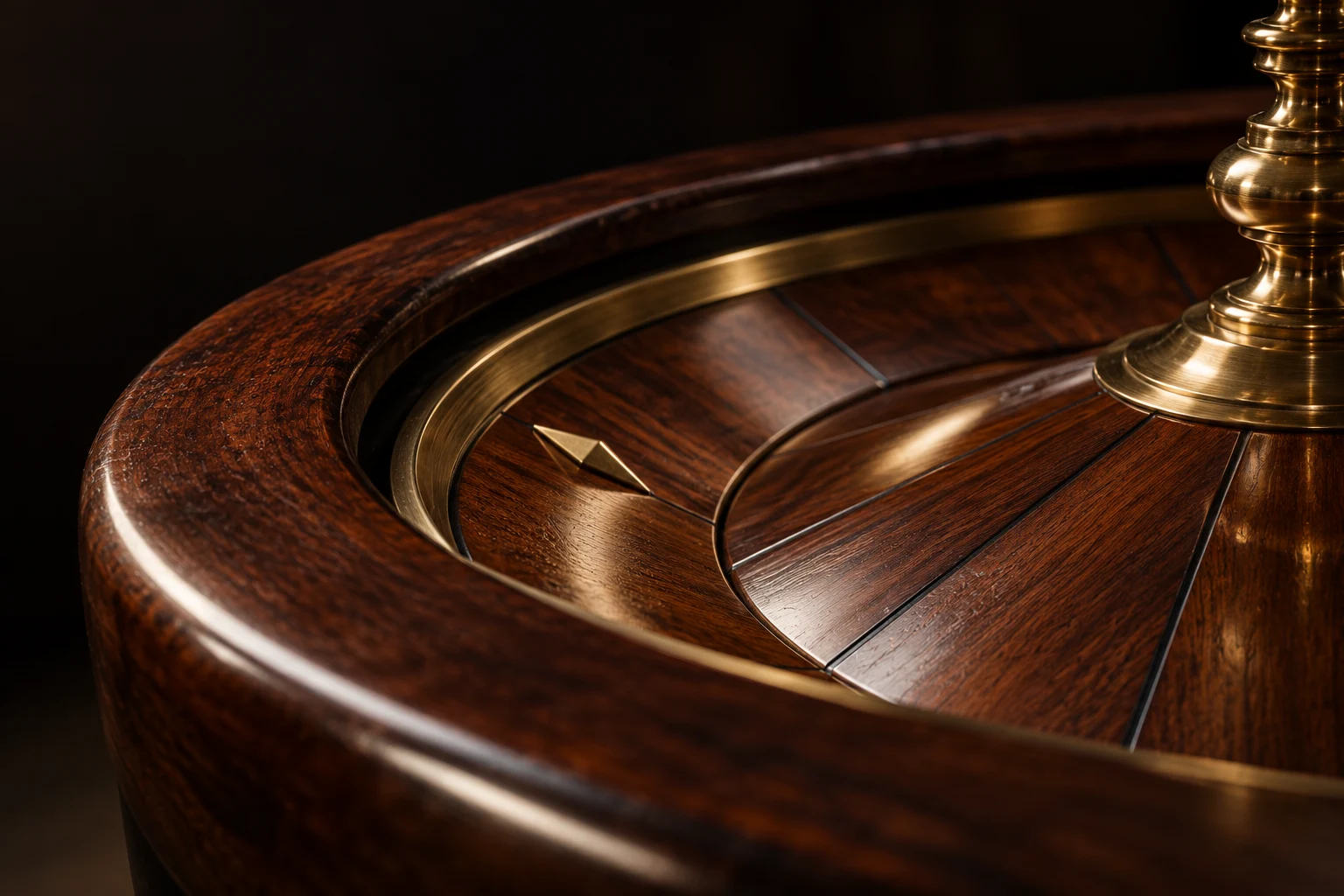
Illustrated macro view of a roulette wheel’s walnut bowl, brass rim and central turret

Parts, numbers & the mechanics of a spin

Inside the
Roulette
Wheel

The bowl stays still, the wheelhead turns, and the ball follows its own path from the outer track to a single numbered pocket.

Explore the mechanism
European single-zero roulette wheel37 pockets in the conventional European clockwise order. The bowl is stationary. The numbered wheelhead and ball move independently. 0 32 15 19 4 21 2 25 17 34 6 27 13 36 11 30 8 23 10 5 24 16 33 1 20 14 31 9 22 18 29 7 28 12 35 3 26 European wheel · 36 numbered pockets + 0
Walnut housing / brass details / numbered rotorFind a pocket’s neighbours
Illustrated close-up of a roulette wheel’s walnut bowl, metal rim and central turret

01 / The assembly

Still outside.
Moving within.

The bowl and its ball track remain fixed. Inside, the wheelhead carries the number ring, pockets and central cone. Select a part to examine its place in the assembly.

Wheelhead and bowl · illustration
Complete wheelEuropean · 37 pockets
European single-zero roulette wheel37 pockets in the conventional European clockwise order. The bowl is stationary. The numbered wheelhead and ball move independently. 0 32 15 19 4 21 2 25 17 34 6 27 13 36 11 30 8 23 10 5 24 16 33 1 20 14 31 9 22 18 29 7 28 12 35 3 26 Separated wheelhead, fixed bowl and central bearing support The numbered wheelhead sits above the bowl on a shared central axis. A cutaway through the front of the housing reveals a simplified bearing assembly and mounting support. Construction varies by manufacturer. Rotating wheelheadFixed bowl Central support Bearing assembly 123
  1. 1 · Wheelhead — rotating numbered assembly.
  2. 2 · Bowl — fixed outer housing.
  3. 3 · Central support — bearings beneath the wheelhead.
Fixed bowl & trackRotating wheelheadIndependent ball

02 / Follow the movement

From the track.
Into a pocket.

The wheelhead turns within the bowl. The ball circles the upper track, then moves inward as it slows. It can bounce against the deflectors and pocket dividers before coming to rest.

European single-zero roulette wheel37 pockets in the conventional European clockwise order. The bowl is stationary. The numbered wheelhead and ball move independently. 0 32 15 19 4 21 2 25 17 34 6 27 13 36 11 30 8 23 10 5 24 16 33 1 20 14 31 9 22 18 29 7 28 12 35 3 26 Stationary bowl
32Red · settled result

05 · One pocket receives the ball

  1. The numbered wheelhead rotates. The outer bowl, upper track and deflectors remain stationary.

  2. The ball travels around the upper track, independently of the rotor and initially in the opposite direction.

  3. As the ball loses speed, it leaves the upper track. Gravity draws it down the sloping apron toward the wheelhead.

  4. Contact with deflectors or other surfaces can change the ball’s path before it reaches the pockets.

  5. The ball settles between two frets and moves with its pocket. Only then is the number announced.

Illustrative motion, fixed result. Real paths vary; this is not a physical simulation or a prediction.

03 / The number atlas

A circle with
its own order.

The European wheel has 37 pockets: green 0, 18 red and 18 black. Its conventional order stays fixed. Red and black alternate among the numbered pockets; odd and even numbers and high and low values do not alternate consistently.

European pocket order, clockwise from zero. Selected pocket 17. 0 32 15 19 4 21 2 25 17 34 6 27 13 36 11 30 8 23 10 5 24 16 33 1 20 14 31 9 22 18 29 7 28 12 35 3 26 17selected pocket37 pockets · clockwise order

Read clockwise around the wheel

17 sits between
25 and 34.

Before25
Selected17
After34

Clockwise: 25, 17, 34. These positions stay fixed. On a fair European wheel, each pocket has the same 1/37 chance, regardless of its neighbours.

Choose a number or a pocket on the ring. With keyboard focus on a pocket, use the arrow keys to move around the wheel.

Read the complete clockwise order

04 / Physical neighbours

Close on the wheel.
Far apart in value.

A neighbour is the next physical pocket along the ring. Choose a centre and one or two neighbours on each side: three or five selected pockets in total. The arc wraps through zero.

Neighbours on each side

Highlight a neighbour arc or a named sector

European pocket order, clockwise from zero. Selected pocket 17. 0 32 15 19 4 21 2 25 17 34 6 27 13 36 11 30 8 23 10 5 24 16 33 1 20 14 31 9 22 18 29 7 28 12 35 3 26 17selected pocket37 pockets · clockwise order Clockwise pocket order
2 25 17 34 6 selected pocket

5 selected pockets · clockwise

22517346

Centre 17 + 2 neighbours on each side. 5 selected pockets: 2, 25, 17, 34, 6.

Three familiar
wheel sectors.

Voisins and Tiers are contiguous arcs. Orphelins occupies the two gaps between them. These groupings describe wheel positions; their traditional wagers use specified combinations of table bets.

On a fair European wheel, grouping pockets does not change their individual 1/37 chances.

05 / Two arrangements

The wheel’s neighbours.
The table’s combinations.

The rotor arranges pockets around a circle. The betting layout groups numbers for chip placement. A shared edge on the table does not imply neighbouring pockets on the wheel.

On the wheel · clockwise 2 25 17 34 6 selected pocket

25 and 34 sit directly beside 17.

On the betting layout

17 shares table edges with 14, 16, 18 and 20. Its wheel neighbours, 25 and 34, belong to separate streets.

Chip placement & payouts

06 / Different pocket configurations

One zero.
Or two.

The conventional American wheel has its own pocket order. Its 38-pocket sequence is not the European order with 00 simply inserted.

European single-zero roulette wheel37 pockets in the conventional European clockwise order. The bowl is stationary. The numbered wheelhead and ball move independently. 0 32 15 19 4 21 2 25 17 34 6 27 13 36 11 30 8 23 10 5 24 16 33 1 20 14 31 9 22 18 29 7 28 12 35 3 26

Single zero

37pockets
0

36 numbered pockets. One zero.

European and French roulette use the conventional single-zero wheel order. French table procedures and zero-settlement rules can differ without changing the wheel’s 37 pockets.

2.70% house edge for straight-up and even-money bets, without special zero rules.
American double-zero roulette wheel38 pockets in the conventional American clockwise order. The bowl is stationary. The numbered wheelhead and ball move independently. 0 28 9 26 30 11 7 20 32 17 5 22 34 15 3 24 36 13 1 00 27 10 25 29 12 8 19 31 18 6 21 33 16 4 23 35 14 2

Double zero

38pockets
000

36 numbered pockets. Two zeros.

On the conventional American wheel, 0 and 00 sit opposite one another. Both are separate green outcomes, and the 36 numbered pockets follow a different order. On a fair wheel, each pocket has a 1/38 chance.

5.26% house edge for straight-up and even-money bets, without special zero rules.

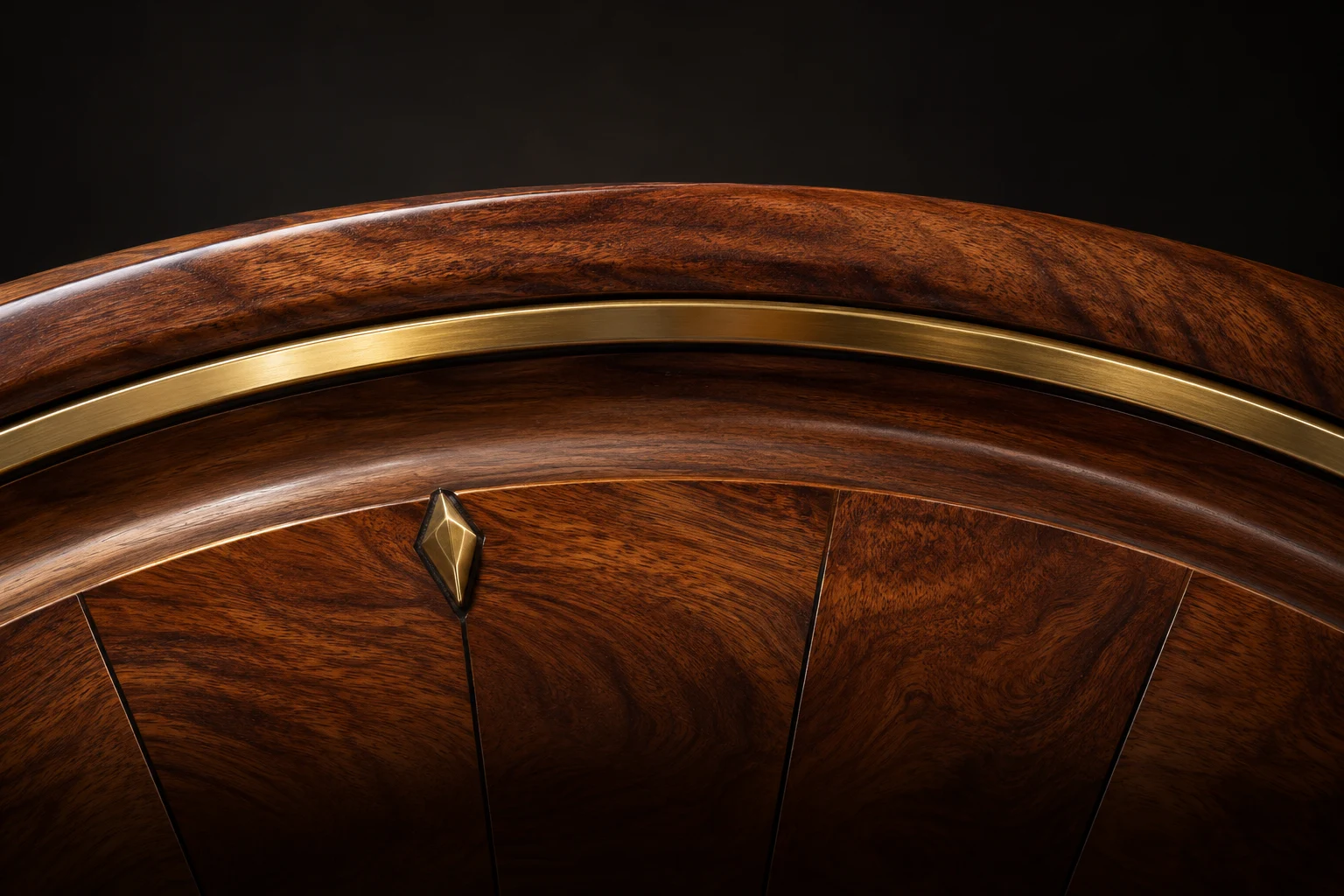
Illustrated close-up of a brass ball track, walnut apron and fixed diamond-shaped deflector Ball track and deflector · illustration

07 / Construction & condition

Level, balanced,
maintained.

01 The ball’s running surface

The ball runs around the upper track before moving inward. Dirt, surface damage and wear are checked during cleaning and inspection.

02 Fixed contact points

Deflectors sit on the apron below the track. The ball can strike them on its way inward; their condition and secure attachment matter during inspection.

Support, alignment
& pocket geometry.

Level & balance
The bowl must sit level, and the wheelhead must be correctly balanced.
Central rotation system
Bearings support smooth wheelhead rotation. Their internal arrangement and servicing requirements depend on the manufacturer.
Pockets & frets
Pockets should have consistent geometry and intact separators. Wear and damage require inspection.

Materials and construction vary by maker. Routine inspection checks the equipment’s condition; appearance alone cannot establish whether a wheel is unbiased.

137for each pocket on an ideal
fair European wheel

The mathematical model

A physical landing.
A probability model.

On an ideal fair European wheel, each pocket has probability 1/37. Under the independent-spin model, previous results do not change those probabilities.

Software roulette uses a random number generator to select the outcome; the on-screen wheel animation displays that result. At a live roulette table, the physical ball’s landing determines the number.

Probability, RTP & house edge

08 / Parts & pocket orders

The wheel,
at a glance.

The outer structure stays fixed. The numbered assembly turns. The ball moves independently until it settles and travels with a pocket.

Stationary

Outer bowl
The fixed structure around the moving wheelhead.
Ball track
The upper circular running surface for the ball.
Apron & deflectors
A fixed deflector on the sloping apron.

Rotating wheelhead

Wheelhead / rotor
The numbered assembly rotates as one unit.
Number ring
The number ring identifies the pockets beside it.
Pockets
A numbered pocket is a physical compartment.
Frets / separators
Raised dividers separate the pocket compartments.
Cone & turret
The central structure belongs to the wheelhead.

Ball & central support

Spindle & bearings
Central support and bearings allow smooth wheelhead rotation.
Ball
A separate object, moving independently of the rotor.

Clockwise pocket orders

Start at zero and read clockwise. After 26 on the European wheel, or 2 on the American wheel, the order returns to 0.

European / French37 pockets
  1. 0
  2. 32
  3. 15
  4. 19
  5. 4
  6. 21
  7. 2
  8. 25
  9. 17
  10. 34
  11. 6
  12. 27
  13. 13
  14. 36
  15. 11
  16. 30
  17. 8
  18. 23
  19. 10
  20. 5
  21. 24
  22. 16
  23. 33
  24. 1
  25. 20
  26. 14
  27. 31
  28. 9
  29. 22
  30. 18
  31. 29
  32. 7
  33. 28
  34. 12
  35. 35
  36. 3
  37. 26
American38 pockets
  1. 0
  2. 28
  3. 9
  4. 26
  5. 30
  6. 11
  7. 7
  8. 20
  9. 32
  10. 17
  11. 5
  12. 22
  13. 34
  14. 15
  15. 3
  16. 24
  17. 36
  18. 13
  19. 1
  20. 00
  21. 27
  22. 10
  23. 25
  24. 29
  25. 12
  26. 8
  27. 19
  28. 31
  29. 18
  30. 6
  31. 21
  32. 33
  33. 16
  34. 4
  35. 23
  36. 35
  37. 14
  38. 2
European single-zero roulette wheel37 pockets in the conventional European clockwise order. The bowl is stationary. The numbered wheelhead and ball move independently. 0 32 15 19 4 21 2 25 17 34 6 27 13 36 11 30 8 23 10 5 24 16 33 1 20 14 31 9 22 18 29 7 28 12 35 3 26

The anatomy of a spin

The bowl remains still.
The rotor turns.
The ball settles
in one pocket.